







Last Updated: October 23, 2026
Quick Summary
A present dad gives his children focused attention, emotional engagement, and consistent time, not just physical proximity. Presence is a skill you build through small daily habits, like one screen-free block, one real question, and one physical check-in. Start with one habit this week and let progress compound.
- Active listening means hearing the feeling first, then asking whether your child wants comfort or help solving it.
- Connection shifts by age: get on the floor with toddlers, sit shoulder to shoulder with tweens and teens.
- A five-minute decompression ritual before walking in the door protects your presence more than an extra hour.
- Pick two weekly anchors that matter most this season and let the others flex.
- Repair starts with you going first: name what happened, own it, state the fix, reconnect.
Table of Contents
- What Being a Present Dad Actually Means
- Positive Parenting Techniques for Dads Who Want Real Connection
- How to Connect With Your Children at Every Age
- Balancing Work and Fatherhood Without Guilt
- Daily Habits for Better Dads
- Managing Phones, Work Messages, and Digital Distractions
- Repairing Disconnection After Conflict or Absence
- Conclusion: Showing Up Is the Standard
- Frequently Asked Questions
What Being a Present Dad Actually Means
A present dad is a father who gives his children focused attention, emotional engagement, and consistent time, not just physical proximity.
That's the short version. Here's the honest one: sitting in the same room while scrolling your phone is not presence.
At Built By Dad, we believe the foundation starts before the parenting tips do. Before you lead them, you lead yourself.
Presence is a skill you build, not a personality trait you either have or don't.
Read more on leading yourself first
Positive Parenting Techniques for Dads Who Want Real Connection
Positive parenting techniques for dads start with two skills: listening without fixing, and validating feelings before correcting behavior. Both take practice. Both change how your kids bring problems to you.
Active Listening Without Fixing
Your child says, "Nobody played with me at recess." Your instinct: solve it. Call a parent, arrange a playdate, fix the problem.
Don't. Not yet.
Active listening means hearing the feeling first. Try this:
- Stop what you're doing and face them
- Repeat back what you heard: "That sounds lonely."
- Ask one question: "Want to tell me more, or do you want help figuring it out?"
That last question is the whole game. It gives your child control over whether they want comfort or a solution. Most of the time, they want to be heard first.
Validating Emotions Before Correcting Behavior
A child who melts down at bedtime isn't usually being defiant. They're tired, overwhelmed, or scared of missing out.
Validation sounds like: "You're frustrated that the day is over. That's a real feeling." Then the boundary: "And it's still bedtime."
Feelings get acknowledged. Limits stay in place. That combination teaches kids that emotions are safe and rules are steady. Both matter for the father-child bond.
How to Connect With Your Children at Every Age
Connection looks different at every stage. A toddler wants your lap. A teenager wants your attention without an interrogation. The mistake many dads make is using one playbook for all of them.
Routines by Age: Toddlers Through Teens
- Toddlers (1-3): Get on the floor daily. Ten minutes of their game, their rules. Add bedtime stories and a consistent hug routine.
- Young kids (4-8): Use car rides and meals for conversation. Try a "question of the day" at dinner. Read together at night.
- Tweens (9-12): Do things side by side, not face to face. Shoot hoops, build something, cook. Talk comes easier when hands are busy.
EXTERNAL_LINK: Family Sets
The throughline: quantity time creates the conditions for quality time. You can't schedule a breakthrough. You can show up often enough that one happens.
Connection looks different at every stage, so here's the age-by-age playbook the article lays out.
| Age group | What connection looks like | What to try |
|---|---|---|
| Toddlers (1-3) | Your lap and their game | Get on the floor daily; bedtime stories; consistent hug routine |
| Young kids (4-8) | Conversation in car rides and meals | Question of the day at dinner; read together at night |
| Tweens (9-12) | Side by side, not face to face | Shoot hoops, build something, cook; talk when hands are busy |
| Teens (13+) | Attention without interrogation | Drive them places; low-pressure late-night kitchen talks; ask less, listen more |
Balancing Work and Fatherhood Without Guilt
Balancing work and fatherhood doesn't mean equal hours. It means your family gets your best attention during the time you do have. Guilt is a poor guide here. A plan works better.
The part most advice skips: the biggest threat to your presence at home usually isn't the hours you work. It's the state you come home in. A dad who walks in fried, still replaying a tense meeting, can be physically in the kitchen and mentally three time zones away.
A few habits that help working dads:
- Build a decompression ritual. Before you walk in the door, take five minutes, a walk around the block, a few minutes of quiet in the car, a shower. The point is to leave work-mode outside so you don't hand your kids the leftovers of your day.
- Set a hard stop for work messages at least an hour before bedtime.
- Protect one weekday meal as non-negotiable family time.
When the Pressure Is Real
Some seasons are heavier than others, a big project, a job change, a financial stretch. You don't have to pretend those seasons aren't hard. What you can do is name them out loud to your family and tell them what to expect: "Work is going to be intense for a few weeks.
Kids handle hard seasons far better when they know they're temporary and that they're not the cause. What wears on them is silence and unpredictability, not the fact that you're busy.
Watch for Burnout, Not Just Busyness
There's a difference between a full schedule and running on empty. When you're chronically exhausted, short-fused, or numb, that's not a time-management problem, it's a signal to pay attention to. A few things that help:
- Protect sleep like it's a meeting you can't move
- Keep some form of movement in your week, even short walks
- Tell one trusted person, your wife, a friend, a doctor, when you're running low
This is where "Before You Lead Them, Lead Yourself" stops being a slogan. You can't pour steady attention into your kids from an empty tank. Taking care of your own stress isn't selfish; it's part of showing up well.
Built By Dad T-Shirt "They Won't Remember Every Word" Inspirational Dad Tee →
You will miss things. That's the job. What matters is that your kids can predict when you'll be there, that you keep those commitments, and that when you're there, you're actually there.
Daily Habits for Better Dads
Daily habits for better dads are small, repeatable actions, not grand gestures. The goal is consistency over intensity. A five-minute bedtime routine done every night beats a monthly big outing.
Start with three anchors you can hit most days:
- One screen-free block per day. Even 20 minutes counts. Put the phone in another room so you're not fighting the pull every few seconds.
- One question that isn't "how was school." Try "What made you laugh today?" or "What was the best part of your day, and the worst?"
- One physical check-in. A hug, a hand on the shoulder, a high five. Small, consistent touch tells kids they're wanted.
Build a Simple Weekly Rhythm
Daily habits stick better when they hang on a weekly frame. A rhythm that works for a lot of busy dads:
- One meal together you protect no matter what
- One one-on-one block with each child, even 15 minutes of their choice
- One shared task where you work side by side: cooking, yard work, fixing something
You don't need all four every week. Pick the two that matter most this season and let the others flex.
Measure Progress Without Chasing Perfection
Presence isn't a pass/fail test, and you're not going to be dialed in every minute, no dad is. What helps is a quick weekly check-in with yourself. Once a week, ask:
- Did I have at least one real conversation with each child?
- When did I put my phone down and actually stay off it?
- Was there a moment I showed up well that I want to repeat?
That last question matters as much as the others. Progress comes from noticing and adjusting, not from scoring yourself.
Our apparel exists for the same reason: as a quiet reminder of the standard you're building. It's a nudge, not a shortcut. The habit does the work.
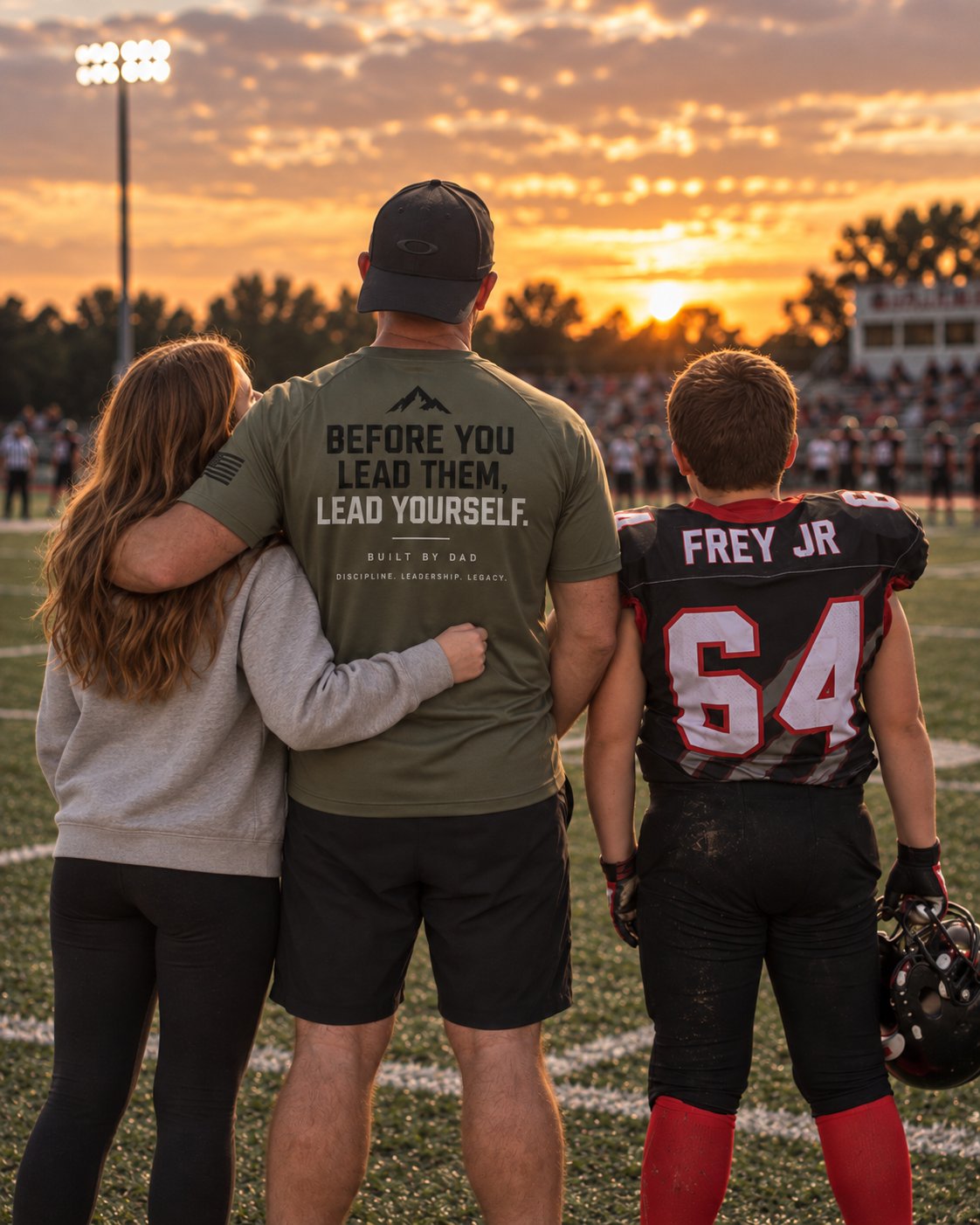
Fatherhood apparel that encourages strong family leadership
Managing Phones, Work Messages, and Digital Distractions
Managing phones and work messages is one of the hardest parts of being a present dad. The phone is your work tool, your calendar, and your distraction all at once.
What works in practice:
- Put your phone in another room during meals and bedtime routines
- Turn off non-essential notifications during family hours
- Announce your work windows: "I'm on a call until 6, then I'm yours"
The 2026 Father's Day data from Gourmet Gift Baskets' dad survey found dads prioritize reliable brands and food and entertainment. Reliability is the trait to carry into your phone habits too.
Repairing Disconnection After Conflict or Absence
Repairing disconnection after a conflict or an absence starts with you going first. Kids don't need a perfect dad.
The repair conversation can be short:
- Name what happened: "I yelled this morning. That wasn't fair."
- Own it without excuses: "I was stressed, and I took it out on you."
- State the fix: "I'm working on staying calm. I'm sorry."
No lecture. No demand that they forgive you on your timeline. Just the apology and the return.
This matters most after deployments, long work trips, separation, or a stretch where you were home but checked out.
Researchers at Florida International University's 2026 fatherhood study note that fathers and father figures help children build social skills, emotional resilience, and healthy relationships.
Conclusion: Showing Up Is the Standard
The hardest part of being a present dad isn't knowing what to do.
Start with one habit this week. One screen-free block. One repair conversation. One bedtime story with the phone in the other room.
Our "They're Watching. Become the Standard" tee carries the message we build around.
EXTERNAL_LINK: "They're Watching. Become the Standard" men's graphic tee
If you want to know more about who we are and why we build this way, read our story.
Frequently Asked Questions
How can I be more present with my kids when I'm tired?
Lower the bar instead of skipping the moment. Ten focused minutes beats an hour of distracted time. Try a bedtime story, a short walk, or sitting with them during homework with your phone in another room. The Fatherhood Project notes that emotional engagement, not the length of time, is what links to better social and emotional outcomes for kids. Tell your child plainly, "I'm tired, but I want to hear about your day," then listen. Being a present dad on a low-energy day still counts.
What are some small daily habits that make a dad more present?
Pick two or three and repeat them until they stick. Examples: a question of the day at dinner, phone-free car rides, a two-minute check-in after work before you touch anything else, or one-on-one time with each child weekly. Consistency and dependability over grand gestures are important. Daily habits for better dads work because they remove the decision from your tired brain. Track them on a calendar for a month, then keep the ones your kids respond to.
How do I balance work responsibilities with being a present dad?
Set a hard stop and protect a transition ritual. When you walk in the door, give your kids two minutes of full attention before you check messages or unpack the day. For balancing work and fatherhood, decide in advance which evenings are family evenings and tell your team. Research summarized by The Fatherhood Project links fathers' active participation and emotional engagement with improved outcomes for children, so the time you protect matters. You will not get every night perfect. Aim for dependable, not flawless.
What are the signs of an emotionally present father?
He listens before he fixes. He notices when a child is off and asks about it. He gets down to eye level, uses names, and remembers what his kids told him last week. He apologizes when he loses his temper. Fathers and father figures help children build social skills, emotional resilience, and healthy relationships. Presence shows up as small, repeated signals: showing up, following through, and staying calm when it is inconvenient. Your kids will read those signals long before they read any book on parenting.
