



Quick Summary
A minimalist gym wardrobe is a small set of versatile workout pieces you can mix and match for training, errands, and everyday life. To build one, take inventory of what you own, count tops and bottoms against your training days and laundry cycle, then fill only the real gaps.
- Sort your current workout clothes into keep, maybe, and let go piles.
- Tops equal your weekly training days plus one or two spares.
- Bottoms usually need one or two fewer pieces than tops.
- Choose moisture-wicking synthetics or merino over cotton for training.
- Wash workout clothes promptly, skip fabric softener, and air-dry when you can.
Table of Contents
- Why a Minimalist Gym Wardrobe Makes Sense for Busy Dads
- Step 1: Take Inventory of What You Already Own
- How Many Workout Clothes Do You Need?
- Gym Clothes Essentials for Men: Tops, Bottoms, and Support
- Building Your Workout Capsule Wardrobe Around Your Schedule
- Adding Winter Athleisure Pieces to Your Capsule
- Start Your Gym Wardrobe This Week and Keep It Simple
- Frequently Asked Questions
How to Build a Minimalist Gym Wardrobe in 7 Steps
Last Updated: November 5, 2026
Why a Minimalist Gym Wardrobe Makes Sense for Busy Dads
If you're a dad juggling work, family, and fitness, your gym clothes probably pile up fast. A drawer full of mismatched shirts and a laundry basket that never empties is a sign your wardrobe is working against you. A smaller, intentional set of workout clothes can save time, cut decision fatigue, and help you keep showing up.
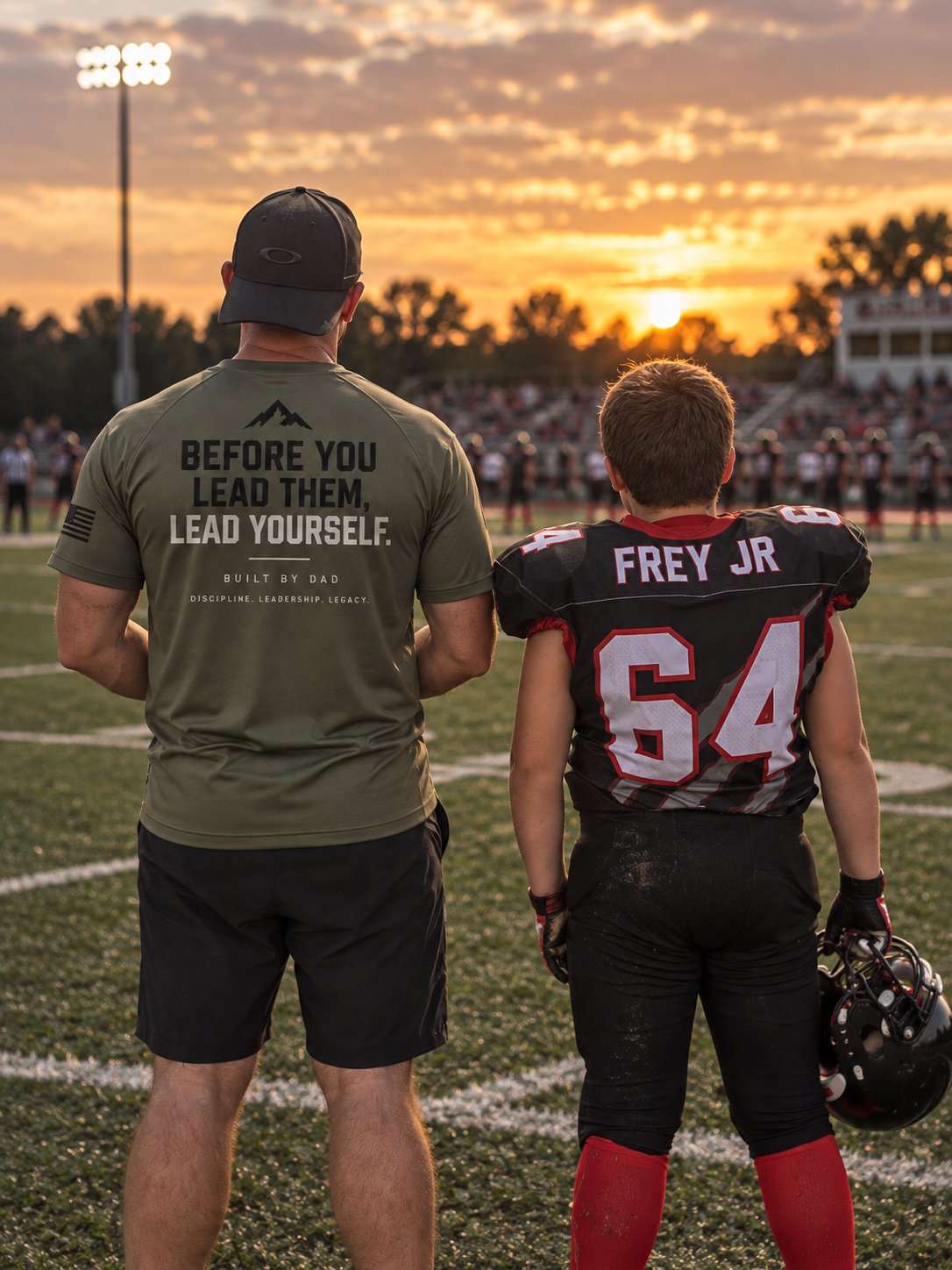
A minimalist gym wardrobe is a small collection of versatile pieces you can mix and match for training, errands, and everyday life. Instead of owning twenty tees you rarely wear, you own a handful you reach for without thinking.
Here's the real payoff:
- Fewer decisions each morning before the gym
- Less laundry because you rotate a tight set of pieces
- Clear gaps so you know exactly what to buy next
- Money saved by spending on quality over quantity
Fathers have limited time, so simplicity isn't a luxury. It's how you stay consistent. Below, we'll walk you through seven steps to build a gym wardrobe that fits your schedule and your budget.
Step 1: Take Inventory of What You Already Own
Start by pulling out every piece of workout clothing you own. Lay it on the bed or floor so you can see the full picture.
Sort everything into three piles:
- Keep: Fits well, feels good, and you wear it often
- Maybe: Usable but uncomfortable or outdated
- Let go: Stretched out, faded, damaged, or never worn
Be honest. A shirt that rides up during squats doesn't belong in your rotation, no matter how much you paid for it.
Watch out: Don't skip the "maybe" pile. Those pieces often hold you back because you keep reaching for them out of habit instead of comfort.
How Many Workout Clothes Do You Need?
Most capsule guides throw out a number, five pieces, seven pieces, ten, without explaining where it came from. That number is useless if it doesn't match your laundry schedule, your sweat level, and how often you actually train. Here's a method you can run in a few minutes.
Start with three inputs:
- Training days per week. Count the days you realistically train, not your best week ever.
- Laundry cadence. How many days typically pass between laundry loads? Be honest, most busy dads are on a weekly or twice-weekly rhythm.
- Sweat and re-wear tolerance. Some guys can wear a top twice for lifting; most can't for cardio. Bottoms usually get more re-wears than tops.
The formula is simple: training days per week + one or two spares = your top count. Your bottom count is usually one or two fewer, because bottoms get re-worn more often.
Worked examples:
- Train 3 times a week, laundry weekly: About 4 tops and 3 bottoms. One spare top covers a missed laundry day.
- Train 5 times a week, laundry weekly: About 6 tops and 4 to 5 bottoms. This is the most common sweet spot for busy dads.
- Train daily or sweat heavily: About 7 to 8 tops and 5 to 6 bottoms, so a single missed laundry day never sidelines a workout.
- Laundry every two weeks: Add two to three tops as a buffer. The buffer is cheaper than skipping sessions.
A common pattern is that guys over-buy tops and under-buy bottoms, then run out of shorts first. Count your actual laundry cycle before you buy anything.
Watch out: Don't buy to the maximum number. Buy to your real training frequency plus a small buffer, then add a piece only when you notice a genuine gap during a normal week.
Your inventory from Step 1 gives you the real starting number. Subtract what you already keep, and you'll see exactly how many pieces you actually need to add, often fewer than you expected.
The right number depends on how often you train and how often you do laundry. Here is a quick reference based on the examples in this section.
| Training days per week | Laundry cadence | Tops and bottoms |
|---|---|---|
| 3 | Weekly | About 4 tops, 3 bottoms |
| 5 | Weekly | About 6 tops, 4 to 5 bottoms |
| Daily or heavy sweat | Weekly | About 7 to 8 tops, 5 to 6 bottoms |
| Any | Every two weeks | Add 2 to 3 tops as a buffer |
Gym Clothes Essentials for Men: Tops, Bottoms, and Support
Build your core around pieces that work for lifting, cardio, and everyday wear. The categories are simple; the difference is choosing fabrics and fits that hold up to real use.
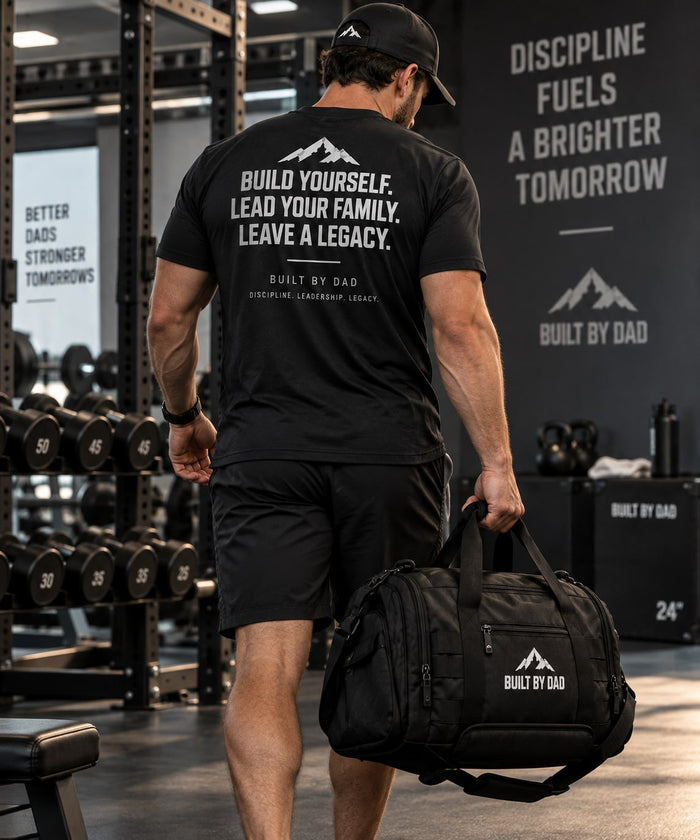
Tops. Two or three moisture-wicking tees cover most training. Look for synthetic blends or merino that move sweat away from your skin rather than cotton, which holds moisture and gets heavy. A heavier long-sleeve layer handles cooler gyms and outdoor mornings. Our Performance Tee is a moisture-wicking option for training, yard work, and everyday wear. You can browse our performance tee to see how it fits into a compact rotation.
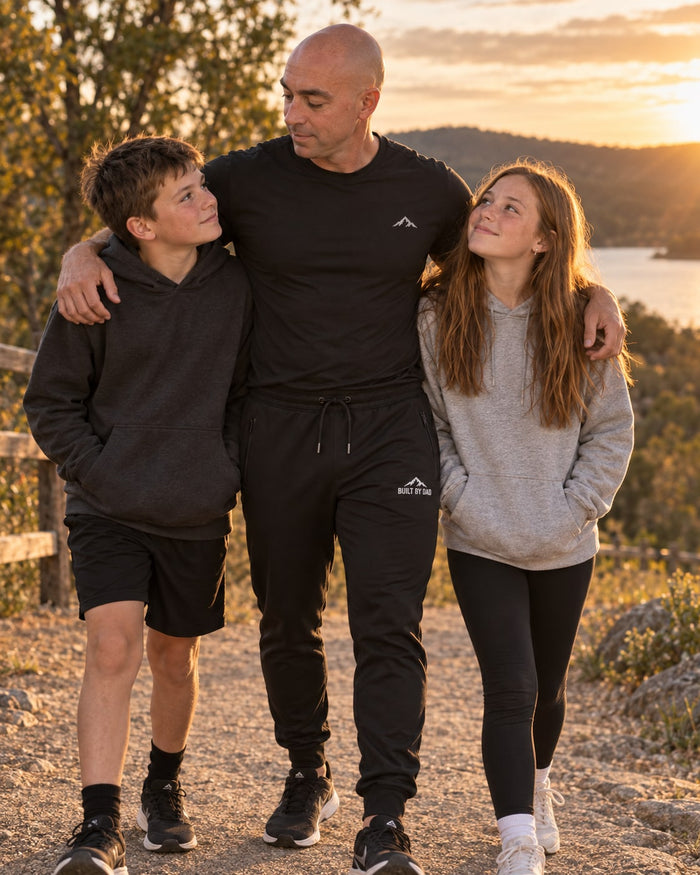
Bottoms. Two pairs of training shorts or pants plus one pair of joggers for warm-ups and recovery covers most weeks. For bottoms, our Heavyweight Sweatpants are designed for training, recovery, coaching, travel, and everyday wear. Find them here: Built By Dad Heavyweight Sweatpants.
Support. Supportive underwear matters more than most guys admit, it affects comfort and chafing during long sessions. For certain training, a compression layer helps with support and warmth. Choose based on comfort first, not hype.
Fabric and care. This is where a minimalist wardrobe lives or dies. Moisture-wicking synthetics dry fast but can hold odor if washed cold and left damp; merino resists odor but costs more and needs gentler care. Wash workout clothes promptly, avoid fabric softener (it coats performance fibers), and air-dry when you can. A small rotation that's cared for properly outlasts a big pile that's washed carelessly.
Activity fit. Running calls for lighter, breathable pieces and secure support; lifting favors shorts that don't ride up and tops that stay put overhead; coaching and sideline time reward a layer you can strip off. Choose pieces that cross over where you can.
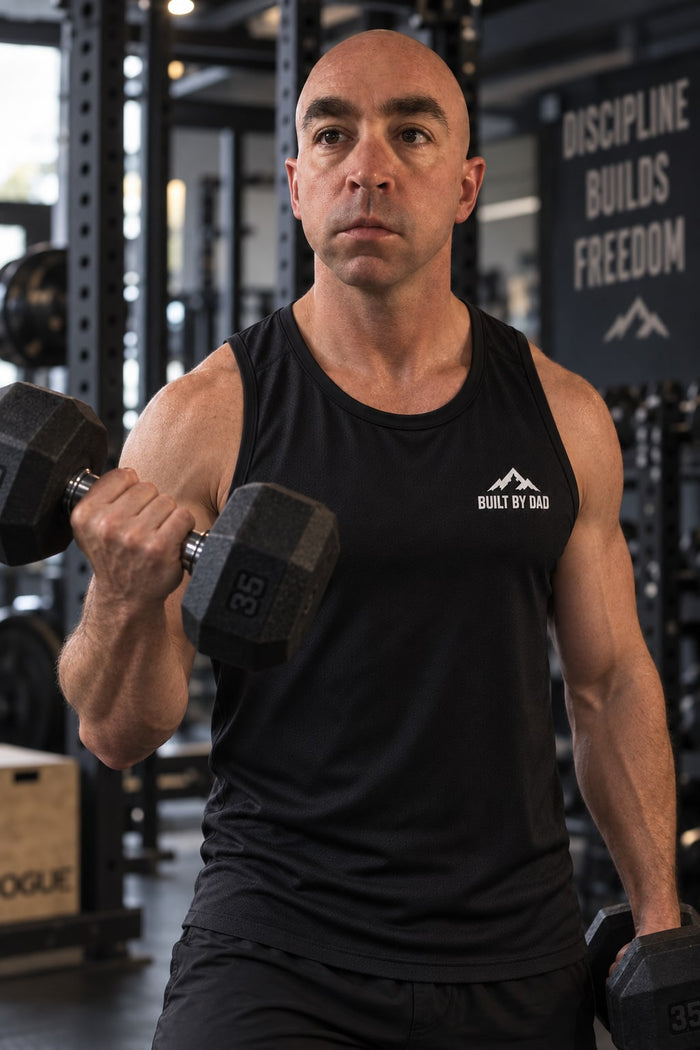
Keep colors neutral so everything mixes without thinking. If you want a versatile option for days off, our Built by Dad Fatherhood Legacy Tank Top is a lightweight pick for early lifts, backyard projects, and weekend hikes. You can check out the tank top and see if it earns a spot in your rotation.
Watch out: Don't chase the cheapest multi-pack. A few well-chosen, properly cared-for pieces will outlast a drawer of thin ones and keep your rotation simple.
Building Your Workout Capsule Wardrobe Around Your Schedule
Your capsule should match your week, not some generic fitness ideal. Map out your training days, work days, and family commitments, then choose pieces for each.
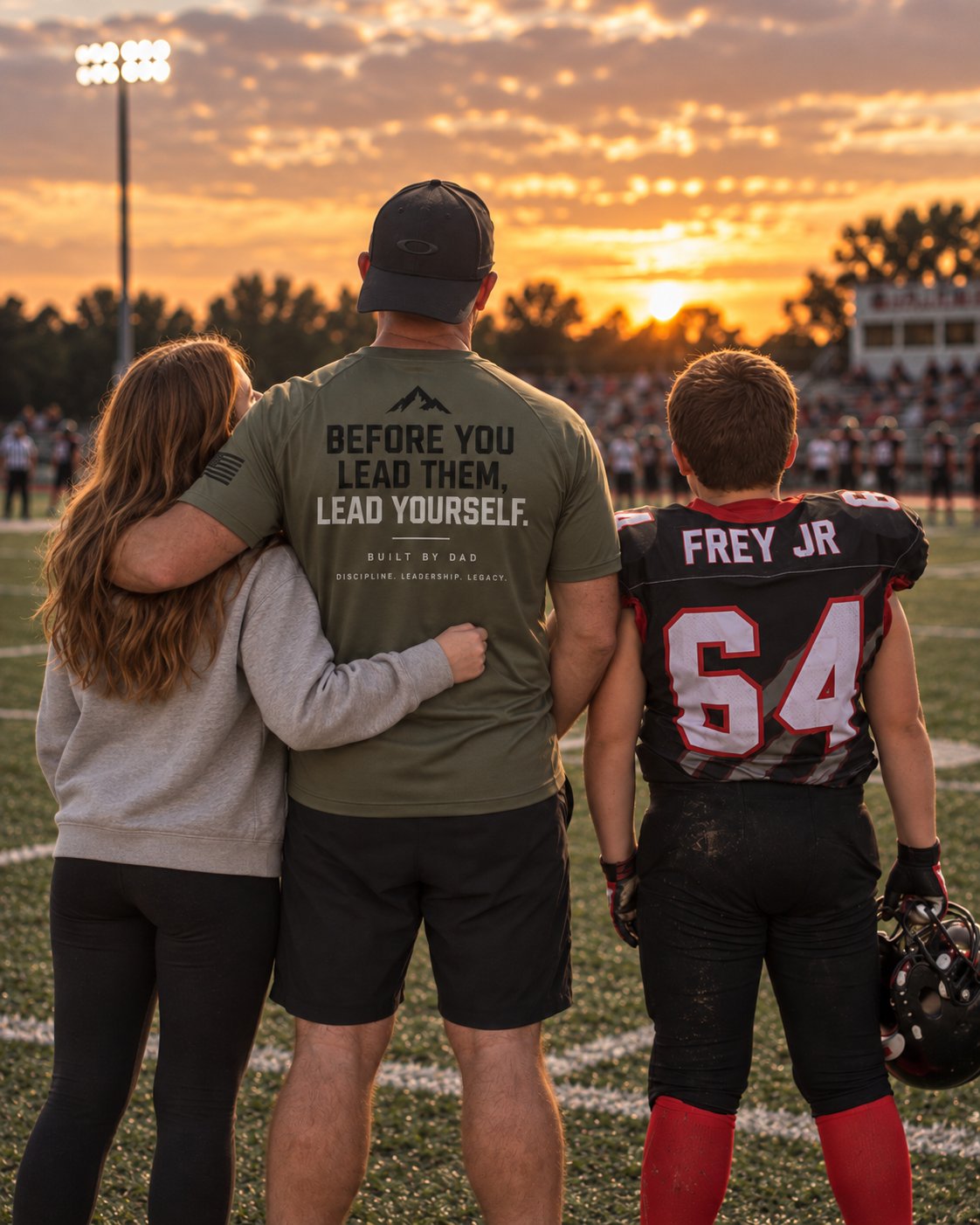
Try this simple method:
- List your weekly activities, such as lifting Monday, a run Wednesday, and a youth sports game Saturday
- Assign one or two pieces to each activity
- Look for overlap, so one top works for the gym and the sideline
- Add a layer for early mornings or cold practice fields
A dad who coaches his son's team on Saturday may only need one extra shirt for the field. That's a smart use of a small wardrobe.
If you want a versatile option for days off, our Built by Dad Fatherhood Legacy Tank Top is a lightweight pick that works for early lifts, backyard projects, and weekend hikes. You can check out the tank top and see if it earns a spot in your rotation.
Adding Winter Athleisure Pieces to Your Capsule
Cold weather changes what you need. Winter training often means layers you can add or remove as your body warms up.
Consider adding:
- A warm-up layer you can strip off once you start moving
- Joggers or sweatpants that handle cold mornings and recovery days
- A long-sleeve base layer for outdoor runs or sports
Keep the same neutral palette so winter pieces match what you already own. Fewer colors mean fewer mistakes when you're getting dressed in the dark.
Start Your Gym Wardrobe This Week and Keep It Simple
You don't need to overhaul your closet overnight. Pick one step from this guide and finish it this week. Count your pieces, donate what you don't wear, and buy only the gaps you find.
Here's a simple plan:
- Day 1: Complete your inventory
- Day 2: Sort into keep, maybe, and let go
- Day 3: List your weekly training schedule
- Day 4: Identify the gaps in your capsule
- Day 5: Buy one or two essentials, if needed
Building a minimalist gym wardrobe is about setting yourself up to show up, consistently, for the people who count on you. Start small, stay consistent, and let your routine do the heavy lifting.
Frequently Asked Questions
How many workout clothes do you need?
Most men do well with about five to seven workout outfits, meaning a complete set of top and bottom plus socks and underwear. Seven to ten tops and five to seven bottoms covers most schedules, because you can rotate pieces between laundry days. Start with what you already own, count how many workouts you do in a week, and make sure you have enough clean options to cover that number with one wash cycle of breathing room.
What should a basic gym wardrobe include for men?
A basic gym wardrobe includes a few performance tees or tanks, two or three bottoms such as shorts or training pants, a supportive pair of training shoes, and one warm layer like a hoodie for cold mornings. Keep colors simple so everything mixes together. Add one or two pieces for recovery days, like joggers, so your gym clothes also work for errands and family time.
How do you build a workout capsule wardrobe?
Start by listing the workouts you actually do each week, such as lifting, running, or yard work. Choose pieces that cover those activities and that coordinate in one or two colors. Remove duplicates you rarely wear. Then add a single item at a time when something wears out, instead of buying a full new set at once.
How often should you replace gym clothes?
Replace gym clothes when they stop doing their job. Look for stretched necklines, thinning fabric, lost elasticity in waistbands, or odor that doesn't wash out. Many men find that heavily used training pieces need replacing sooner than casual wear. Rotating your pieces spreads wear across more items and extends how long each one lasts.
Ready to build a simpler wardrobe for the work you're doing? Join our email list for practical fatherhood and fitness tips delivered to your inbox.
